

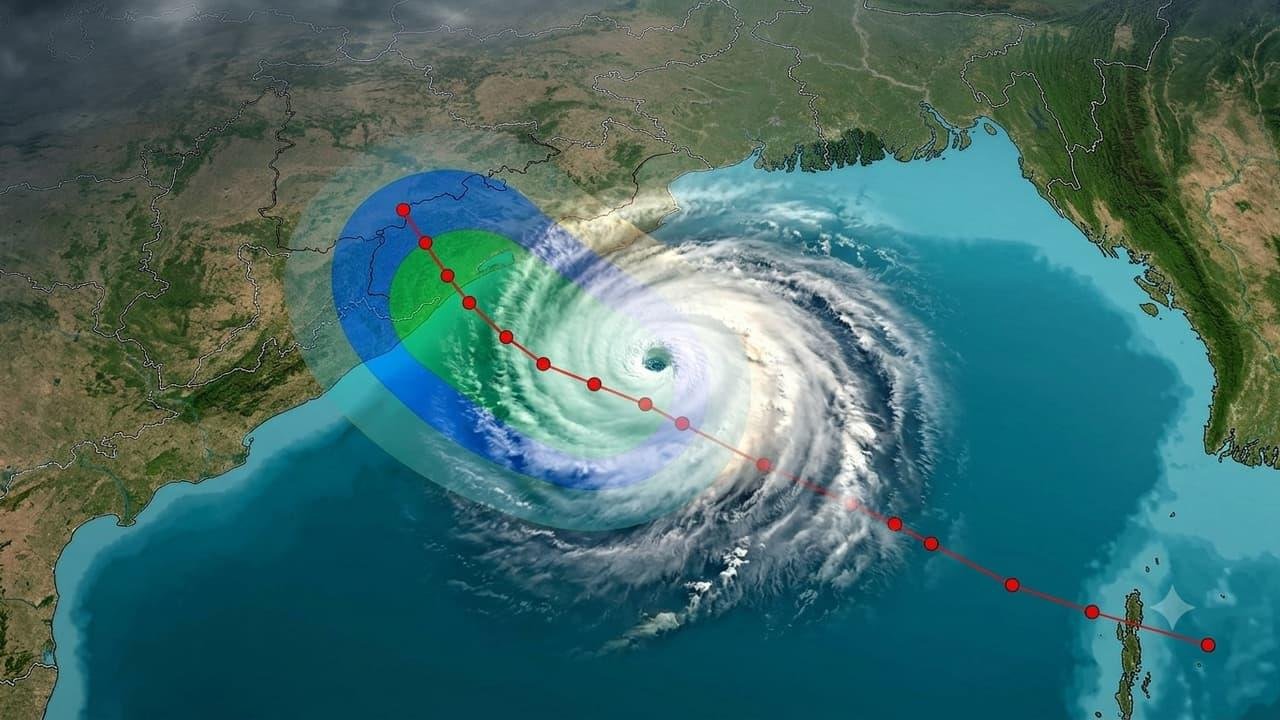
The cyclone crossed the coast between Nellore and Narsapur, close to Ongole in Prakasam district, between 3.30 am and 5.30 am, with wind speeds of 100–110 kmph and gusts reaching 120 kmph
‘Murasu’ crossed Andhra coast, likely to weaken into a cyclonic storm by noon: The system is likely to continue to move north-northwestwards and weaken gradually into a cyclonic storm with wind speeds reaching 80-90 kmph gusting to 100 kmph by noon and further into a deep depression by midnight of Tuesday, said the India Meteorological Department (IMD).
The landfall process began at around 1 am on Tuesday near Ongole, Andhra Pradesh. Wind speed reached up to 110 kmph and gusting up to 120 kmph. Severe cyclonic storm Murasu left a trail of destruction across coastal Andhra Pradesh after crossing the south Andhra coast early Tuesday. Thousands of trees uprooted, electric poles and fishing boats damaged, while inundating several areas and extensive damage to standing
The cyclone crossed the coast between Nellore and Narsapur, close to Ongole in Prakasam district, between 3.30 am and 5.30 am, with wind speeds of 100–110 kmph and gusts reaching 120 kmph, the India Meteorological Department (IMD) said.
Prakasam, Bapatla, Palnadu and Guntur districts bore the brunt of the storm, which triggered heavy to extremely heavy rainfall. The cyclone was centred roughly 30 km from Ongole, 50 km from Kavali, 70 km from Bapatla, 100 km from Nellore and 140 km from Machilipatnam. It had been moving north-northwestwards at a speed of 8 kmph during the previous six hours before making landfall.
With heavy to very heavy rainfall forecast, people are advised to stay indoors, avoid unnecessary travel and keep children inside.
ALSO READ: Torn or Damaged Notes? Know RBI Rules for Exchanging Currency


