

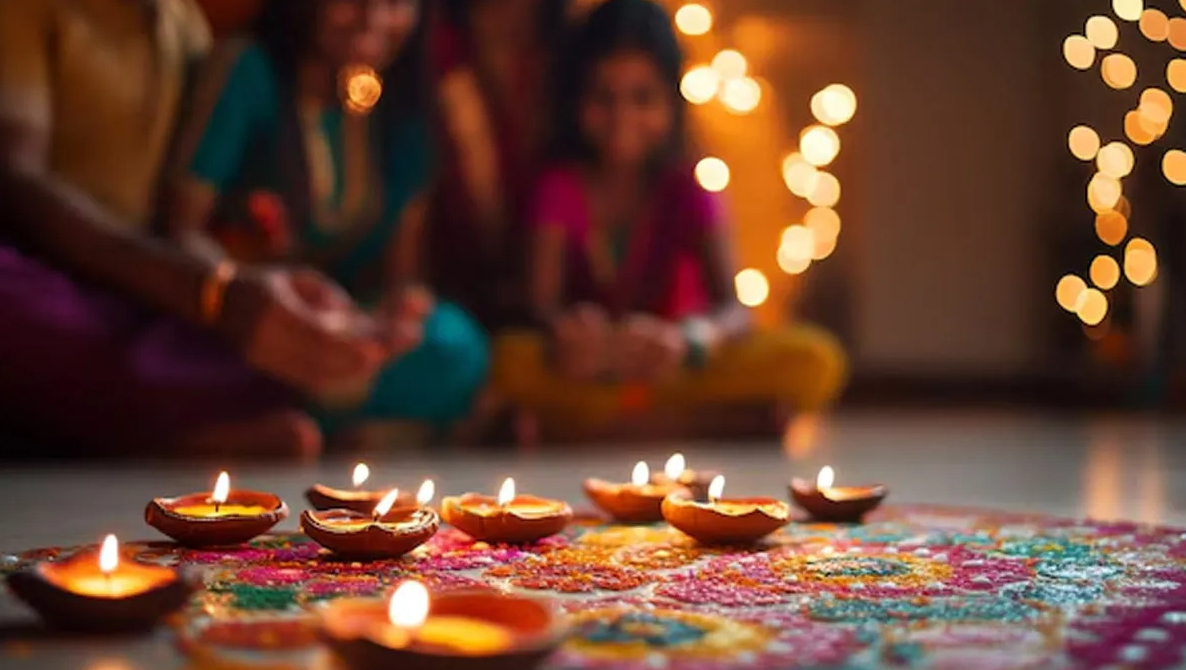
A day before Diwali is celebrated as Naraka Chaturdashi. It commemorates lord Krishna’s victory over the demon Narakasura
Why Narak chaturdashi is celebrated: Diwali is also known as festival of lights. The festival symbolizes the victory of light over darkness and knowledge over ignorance. The festival is observed for 5 days i.e. Dhanteras, Choti Diwali/ Naraka Chaturdashi, Main Diwali/ Laxmi Puja, Govarshan Puja/Annakut and Bhai Dooj/Bhai Phota.
The festival brings together families and communities through rituals, prayers, lights, sweets and traditions. A day before Diwali is celebrated as Naraka Chaturdashi. It commemorates lord Krishna’s victory over the demon Narakasura. According to Hindu mythology, there was a powerful demon named Narakasura. He was also known as Bhaumasura. His atrocities troubled people on earth and heaven. He threatened many kings and gods. Furthermore, he captured approximately 16,000 young women. The demon had been granted a boon that could be killed only by a woman.
Troubled by his increasing atrocities, lord Indra approached lord Krishna and seeked his help. Thereafter, lord shri Krishna set out for battle with his wife Satyabhama, who stood firmly by his side throughout the battle. Narakasura was killed by Satyabhama. After this, Lord Krishna freed over 16,000 girls held captive by Narakasura. It is said that Narakasura was killed on the Chaturdashi date of the Krishna Paksha (dark fortnight) of the month of Kartik. In memory of this event, Naraka Chaturdashi is celebrated every year on this day. It is also known as Chhoti Diwali. This festival signifies the victory of good over evil.
ALSO READ: Gold Prices Rise a Day After Dhanteras; Check the Latest Rates
According to religious beliefs lighting 14 lamps in different parts of the house on Narak Chaturdashi removes negativity and creates an atmosphere of happiness and peace.
Lighting a lamp in honour of Yamraj, the god of death, on the evening of Chhoti Diwali is believed to protect family members from the fear of untimely death and bless them with longevity. In Hinduism, the south direction is considered the direction of Yamaraj, so this lamp is always lit outside the house facing the south direction. It is a tradition to light a Chaumukhi (four-faced) lamp mostly made of flour or clay, in which mustard or sesame oil is added.


