

Wild animals are increasingly being forced to share shrinking spaces with humans as development and encroachment continue to affect forest habitats. While encounters between people and wildlife are becoming more common, disturbing animals for amusement can turn an otherwise peaceful sighting into a dangerous confrontation.
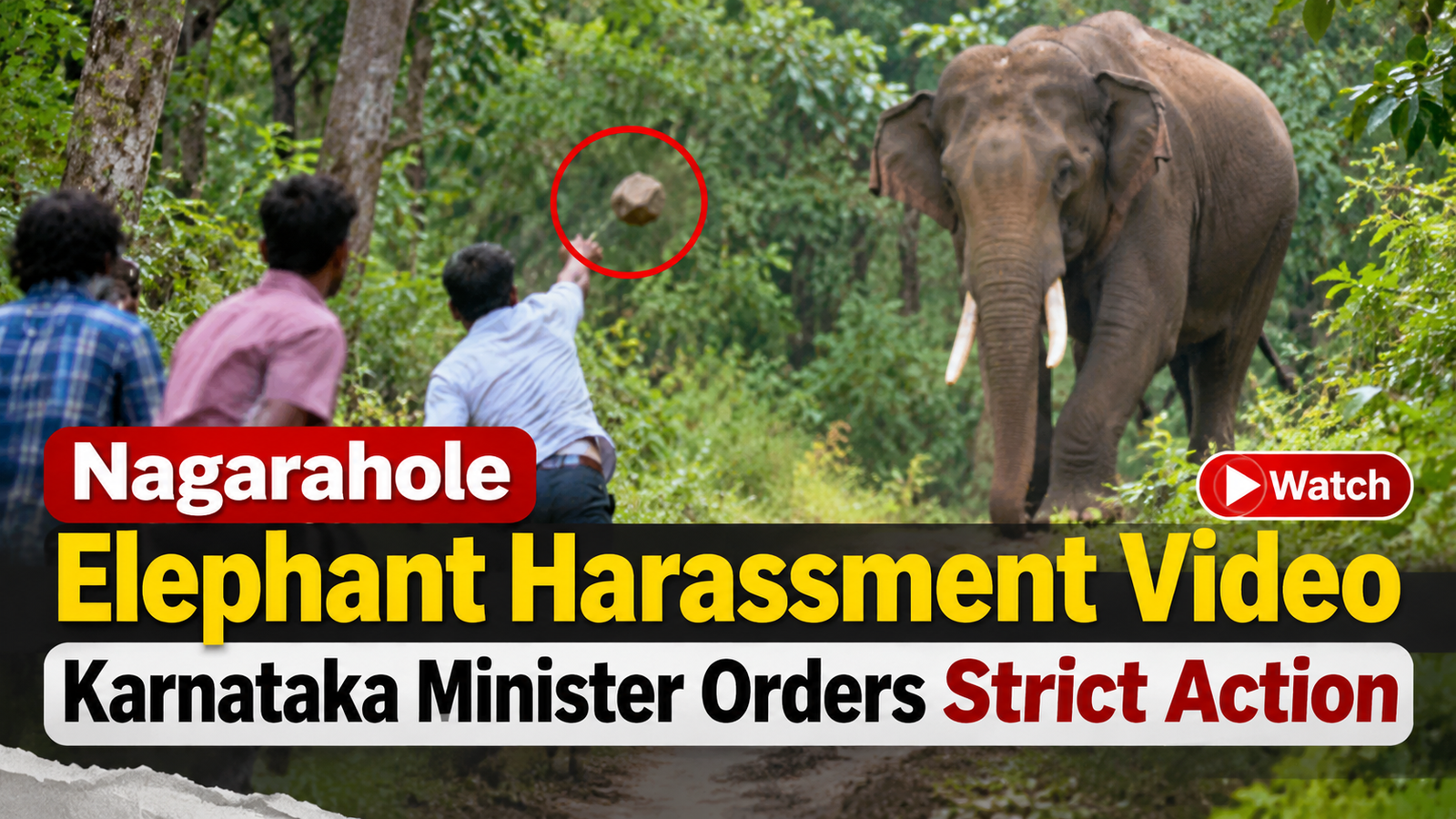
A shocking example has emerged from Karnataka’s Nagarahole Tiger Reserve, where two men allegedly targeted a wild elephant with stones. The incident, captured on video, has triggered widespread anger among wildlife lovers.
Scooter-Borne Duo Caught On Camera
The footage circulating on social media shows two men riding an orange scooter along a forest road. They spot an elephant standing near the roadside and stop their vehicle.
Instead of leaving the animal undisturbed, the pillion rider gets off, picks up a stone and throws it towards the elephant. When the animal appears to approach him, he quickly retreats to the scooter. His companion is also seen laughing before the duo flee the spot.
The scooter’s registration number was identified as KA 09 HY 0257, providing officials with a crucial lead.
Karnataka Minister Directs Forest Officials To Act
The video soon attracted attention from wildlife enthusiasts, who demanded strict punishment for the alleged offenders. Karnataka Forest, Ecology and Environment Minister Ramalinga Reddy also condemned the incident and ordered immediate action.
He directed forest officials to trace the vehicle, identify the men and initiate stringent proceedings under the Wildlife (Protection) Act, 1972. He also asked Head of Forest Force B.P. Ravi to submit a report detailing the action taken.
Scooter Traced, Search For Men Continues
According to reports, officials traced the scooter to Anemala Hadi in the D.B. Kuppe forest range of H.D. Kote, Mysuru district, with help from the Transport Department. However, the individuals were not found at the registered owner’s residence.
Wildlife Safety Rules Cannot Be Ignored
Nagarahole’s visitor guidelines prohibit getting out of safari vehicles, provoking animals, making loud noises and feeding wildlife. Such conduct can trigger defensive reactions, putting human lives and animals at risk. The incident is another reminder that wildlife encounters demand caution, not provocation.


