

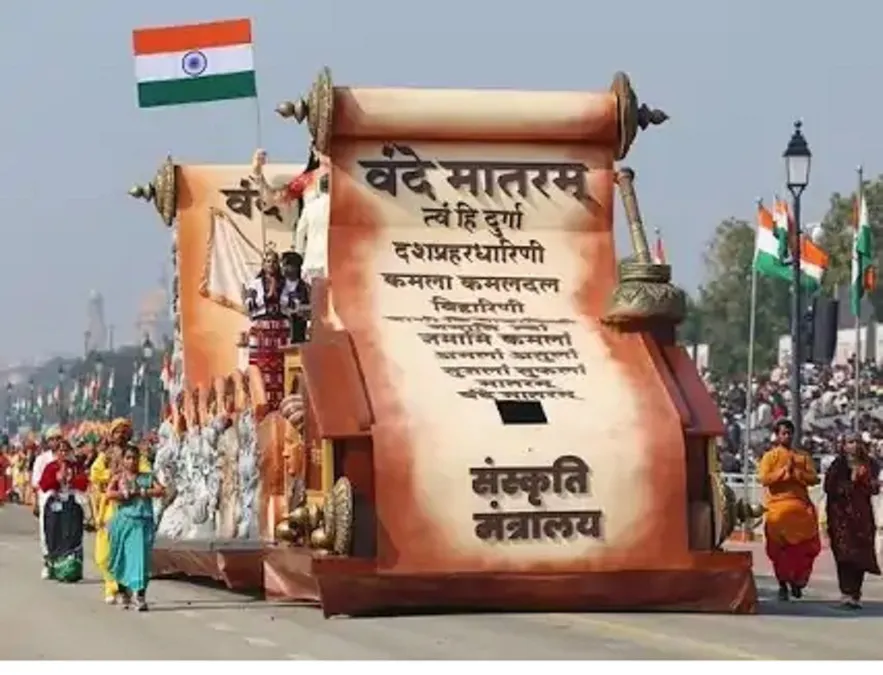
Central Government Makes ‘Vande Mataram’ Mandatory at Government Functions Before National Anthem
Vande Mataram Now Mandatory at Government Functions Before National Anthem: In a significant decision, the Central Government has issued new guidelines regarding the national song Vande Mataram. According to the Home Ministry, the six-stanza version of the song, lasting approximately three minutes and ten seconds, will now be mandatory at all government functions and official events, to be sung before the national anthem, ‘Jana Gana Mana’.
The guidelines specify that Vande Mataram must be played during the hoisting of the national flag, the arrival of the President at official events, his speeches, and at government-organized functions, including events held in schools. Educational institutions have also been instructed to promote the daily singing of the song to cultivate awareness and respect for national symbols.
Interestingly, cinema halls have been excluded from this rule. Therefore, it will not be mandatory to play Vande Mataram or stand in respect before films in theaters.
The Six Stanzas of Vande Mataram
The national song was composed by Bankim Chandra Chatterjee on 7 November 1875. The original version has six stanzas, two in Sanskrit and four in Bengali (with some Sanskrit words). The Home Ministry has now reinstated all six stanzas, including the four that were removed by the Congress in 1937.
- First stanza: “Vande Mataram. Sujalam suphalam malayajashitlam…”
Meaning: Saluting Mother India, abundant in water, fruits, flowers, and lush greenery. - Second stanza: “The white-bright, bright-eyed Yamini, adorned with flowering tree petals…”
Meaning: Saluting the motherland’s beauty, sweetness, and blessings. - Third stanza: “Millions of throats make the sound of murmuring, millions of earthly feet bearing Kharkars…”
Meaning: Honoring India’s strength, courage, and protective power. - Fourth stanza: “You are knowledge, you are religion, you are the heart, you are the life…”
Meaning: Saluting India as the essence of devotion, knowledge, and spirituality. - Fifth stanza: “Tvamahi Durga dashapraharanadharini, kamala kamaldalwalviharini…”
Meaning: Bowing to India as the embodiment of Durga and Lakshmi, who provides knowledge and prosperity. - Sixth stanza: “Black, simple, smiling, earthly, earth-filling mother. Vande Mataram.”
Meaning: Saluting India as the source of honor, glory, and happiness.
This move is seen as an effort to revive the complete version of the national song and instill patriotism among citizens, especially the younger generation.
ALSO READ: