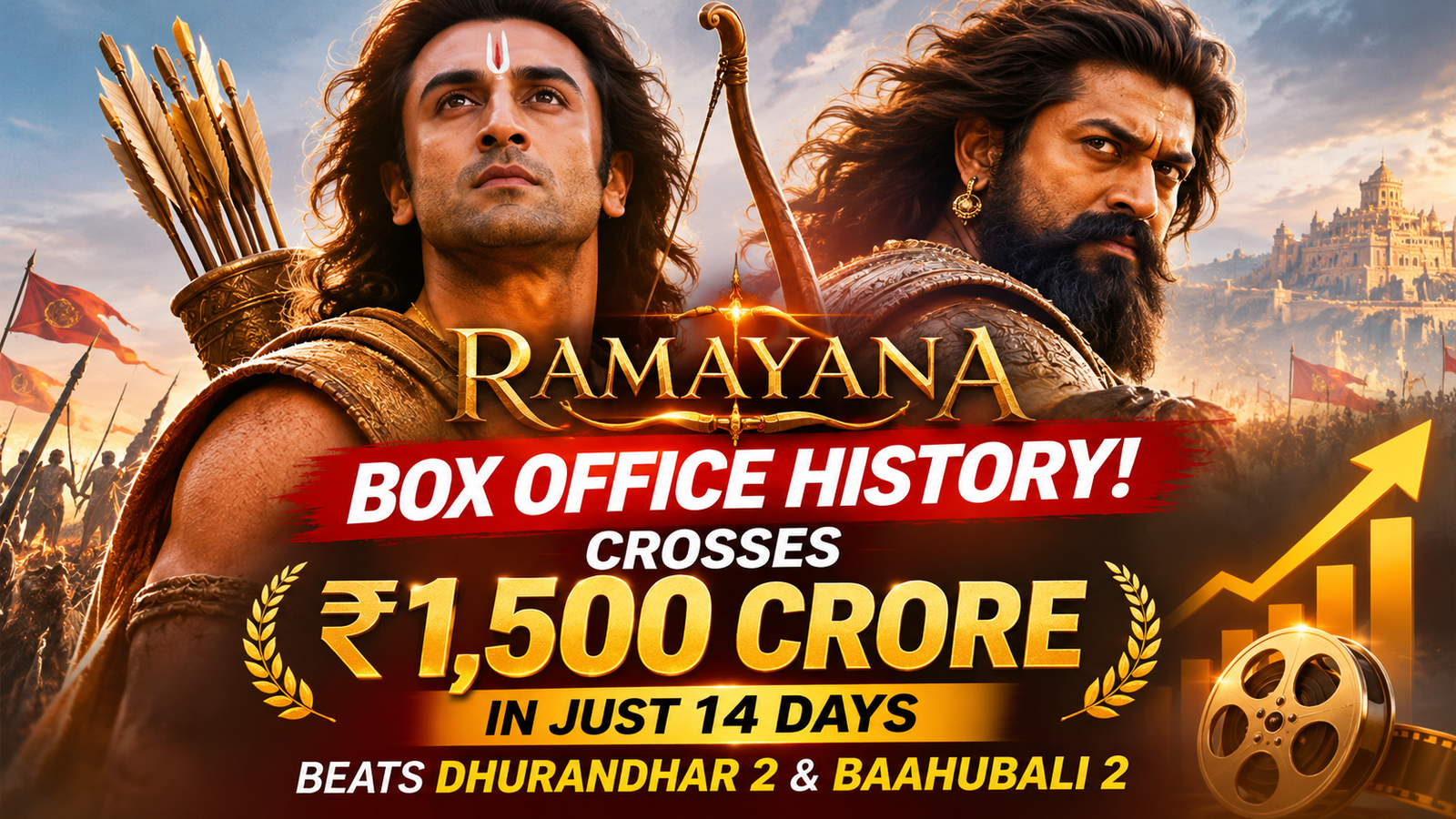


Breaking box office records while keeping conversations alive beyond theatres, Nitesh Tiwari’s Ramayana continues to make headlines. Despite its impressive commercial performance, the film has faced criticism over its interpretation of some familiar characters.
Sai Pallavi’s portrayal of Sita as a sword-wielding warrior has particularly divided viewers. Meanwhile, Yash’s Ravana has also drawn attention for being presented as a comparatively softer and kind-hearted king.
Amid the ongoing discussions, author Amish Tripathi has come forward to defend the film’s portrayal of Sita, pointing out that the character’s warrior side has roots in an ancient account.
Amish Tripathi Reveals An Unusual Sita-Ravana Connection
In the film, Sai Pallavi’s Sita is not restricted to the conventional image audiences are familiar with. She is shown to possess knowledge of both shastras (weapons) and shaastras (books). From training young girls in swordplay to taking on asura soldiers with a dagger, her character gets several moments showcasing her fighting abilities.
Addressing the debate in an interview with Screen, Amish explained that the Ramayana has multiple versions, some of which remain relatively unfamiliar to the general public. He specifically brought up the Adbhuta Ramayana, traditionally attributed to Valmiki, which describes Sita as a warrior who defeats an even more powerful Ravana.
He said, “Because we are not taught the Ramayana and the Mahabharata through our education system, we are not aware of all the versions. There is a version called the Adbhuta Ramayana, credited to Valmiki. He wrote three versions: the Valmiki Ramayana, the Adbhuta Ramayana, and the Ananda Ramayana. In Adbhuta Ramayana, the elder, more powerful Ravana was killed by Sita. She was a warrior in that version. It’s not a new version. It’s an ancient version credited to Valmiki.”
Amish Draws A Parallel With The Discovery Of Troy
The author, who gained popularity through his Meluha series, has often explored different perspectives on India’s ancient stories. His Ramayana-inspired works include Sita: Warrior of Mithila, which also presents Sita through a distinct lens.
Amish further explained that people’s understanding of ancient accounts can evolve with time. Citing the example of Homer’s Odyssey, he highlighted how something once dismissed as fiction later gained a connection with historical discoveries.
“There was a time when it was believed Homer’s Odyssey was a pure fantasy. This was a time when the church in Europe was clamping down on any such stories. But then in 19th-century Europe, Troy was discovered. Yes, the core elements of the Trojan War did happen, although there may have been some magic realism added to it,” he added.