

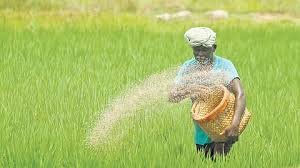
india agriculture affected by war impact
Iran War Impact On Agriculture: Urea, Fertilizer And Pesticide Crisis Seen In India, Will Farmers Get Fertilizer In The Kharif Season ? The ongoing war between the US, Israel and Iran is not limited to West Asia, but is also affecting farmers in remote villages in India. With the upcoming Kharif season approaching, there are fears that fertilizer and pesticide shortages and skyrocketing poverty will become a major problem in India due to disruptions in global supply chains.
The price of agricultural equipment has increased dramatically due to rising crude oil prices and supply disruptions:
• Black market of Urea: While the official price is around Rs. 280 per bag, due to its shortage in the market, it is being sold for Rs. 1,100 to Rs. 1,200 per bag.
• DAP price hike: Since the start of the war, DAP prices have increased sharply from Rs. 1,300 per bag to Rs. 2,100-2,200.
• Increase in pesticide prices: Pesticide prices have increased by about 25%. As a result, the cost of farming per acre has increased from Rs. 3,500 earlier to Rs. 5,000 to Rs. 6,000.
Impact on India’s imports
India is the world’s second largest fertilizer consumer after China. India imports 20% to 30% of its urea requirements and about 50% of LNG, which is essential for domestic urea production, from the Gulf region.
• Trade through the Strait of Hormuz has been severely disrupted due to the current war.
• On the other hand, to meet its own domestic demand, China has imposed a complete ban on the export of fertilizers and biostimulants, which has also blocked alternative supply routes.
• The cost of plastic packaging has increased by about 70% to 80% and paper packaging by 15% to 20%.
Government steps to avert potential crisis
The central government has expressed its readiness to address the shortage created by the Middle East crisis:
• Import of 2.5 million tonnes of urea: State-owned Indian Potash Limited (IPL) has floated a tender to purchase 2.5 million metric tonnes of urea. Bids for this will be submitted by April 15 and the ships are expected to arrive by June 14, which is important for sowing paddy, maize and soybean.
• Buffer Stock: According to the Ministry of Agriculture, against the requirement of 390.54 lakh metric tonnes (LMT) of fertilizer for the current Kharif season, there is currently a buffer stock of 180 lakh metric tonnes (about 46% of the total requirement). This is significantly higher than the normal buffer stock of 33%.
• Pesticide Status: There is adequate stock of pesticides. The requirement is 74,266 metric tonnes while the production is 2.61 lakh metric tonnes. Local monitoring committees have been formed to check black marketing.
• Expert Opinion and Future Predictions
• Industry experts have warned that companies only have 30 to 45 days of stock available. Even if there is enough stock to temporarily meet the shortage, the real risk is the price volatility in the global market. If this war continues for a long time, the cost of farming will increase further for farmers, which will ultimately put the burden of food inflation on the common man.
• To avoid such crises in the future, experts have suggested changes in the fertilizer subsidy policy in the country, promoting the use of NPK and bio-fertilizers, and increasing indigenous production while expanding import sources.
ALSO READ : New LPG Policy in Delhi Mandates PNG Shift for Commercial Users