
Asian Markets Slide as Trump’s Greenland Tariff Threats Revive Global Trade Fears
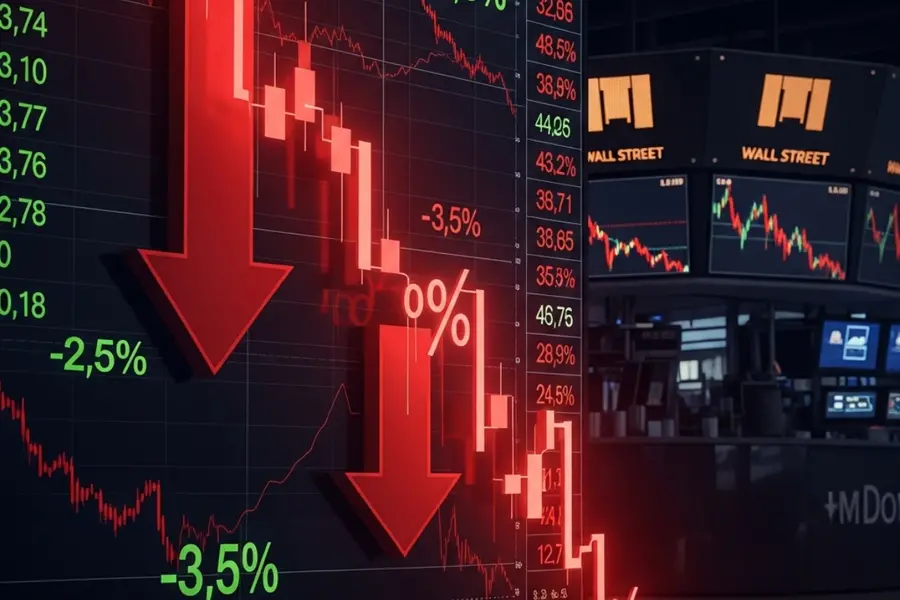
Asian Shares Decline Following Wall Street Selloff Sparked by Trump’s Greenland Remarks: Asian shares declined on Tuesday as fresh tariff threats from US President Donald Trump reignited global trade tensions, unsettling investor sentiment across regions. Asian equities fell about 0.5%, while futures tied to the S&P 500 dropped 1.1%, signaling a weaker opening for US markets. Treasury yields moved higher as cash trading resumed after a holiday, while European stocks extended losses.
The yield on the benchmark 10-year US Treasury rose three basis points to 4.26%, reflecting a catch-up move after Monday’s market closure. The 30-year yield climbed nearly four basis points. European equities suffered their steepest decline since November, underscoring growing unease over renewed geopolitical and trade risks.
In currency markets, the US dollar strengthened against most major peers. Precious metals eased slightly, with gold and silver retreating after recently closing at record highs. Cryptocurrencies also came under pressure, with bitcoin trading near $92,500.
Japan remained a focal point in Asian trading after Prime Minister Sanae Takaichi officially announced early elections scheduled for next month. The yen was steady in early dealings, while Japan’s 40-year government bond yield rose to 4%, the highest level since the bond’s introduction in 2007. Investors are closely watching an upcoming auction of 20-year government debt amid concerns about fiscal policy. Bond yields continued to climb following reports of a proposed tax cut, which have fueled worries about increased government spending under Takaichi’s leadership.
Asian Equities Mostly Down After Trump’s Greenland Comments Shake Global Markets
Market volatility has intensified after Trump threatened to impose tariffs on countries opposing his bid to exert control over Greenland, drawing strong resistance from European leaders. The renewed confrontation has revived concerns seen earlier in Trump’s second term, including questions over the Federal Reserve’s independence and his push to cap credit-card interest rates.
The transatlantic standoff comes despite a backdrop of strong corporate earnings and sustained investment in artificial intelligence, which had previously supported risk appetite. Attention is now turning to the European Union’s response, as officials consider retaliatory tariffs on up to €93 billion ($108 billion) worth of US goods.
French President Emmanuel Macron has pushed for the activation of the EU’s anti-coercion instrument, a powerful trade defense mechanism. However, German Chancellor Friedrich Merz struck a more cautious tone on Monday, citing Germany’s heavy reliance on exports as a reason for restraint.
Trump is scheduled to address the World Economic Forum in Davos on Wednesday, an appearance investors hope may offer greater clarity on his trade agenda.
In Japan, Takaichi said the upcoming election would seek a mandate for fundamental changes to bolster both economic and defense policies, warning that “no one will help a country that cannot help itself.” As global markets grapple with renewed political and trade uncertainty, investors remain on edge, watching for signals from policymakers on both sides of the Atlantic and in Asia.
ALSO READ: