
Iran Announces Extended Mourning After Supreme Leader’s Death in Strikes
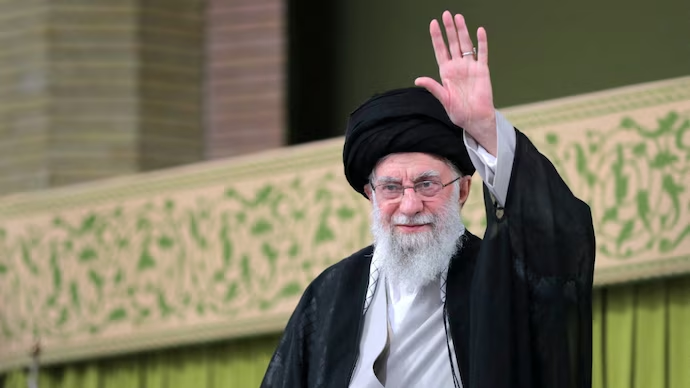
Iran Confirms Death of Supreme Leader Khamenei, Declares 40 Days of National Mourning: The Middle East stands at a critical and emotional crossroads following unverified reports claiming that Iran’s Supreme Leader, Ayatollah Ali Khamenei, was killed in an alleged joint airstrike carried out by the United States and Israel.
After Khamenei was martyred. Meanwhile, 40 days of national mourning have been declared in Iran. In response, Iran has launched missile strikes on US military bases and some countries in the Middle East.
While Iranian state-linked platforms and social media accounts have circulated messages suggesting his death, there has been no independent confirmation from major global news agencies at the time of reporting.
A post shared from an account associated with Iran’s Supreme Leader on X quoted a Persian verse often used to honor martyrs: “Among the believers are those who fulfilled their vows to Allah…” The wording has fueled widespread speculation and emotional reactions across the region.
Claims and Counterclaims
State-linked Iranian media reportedly described Khamenei as “martyred,” while accounts connected to military monitoring channels echoed similar statements. Meanwhile, US President Donald Trump and Israeli Prime Minister Benjamin Netanyahu have previously made strong claims regarding targeted operations against Iranian leadership.
However, neither Washington nor Tehran has released detailed, independently verifiable evidence confirming the death.
Public Reaction and Mourning Claims
Reports circulating online suggest that a 40-day public mourning period and a seven-day national holiday have been declared in Iran. If confirmed, such a move would signal a moment of historic transition for the country.
For many Iranians, the news — whether confirmed or not — has triggered deep emotions. Supporters view Khamenei as a central religious and political authority, while critics see this moment as potentially transformative for Iran’s future political direction.
A Region on Edge
The broader conflict between Iran, Israel, and the United States has already heightened geopolitical tensions. Financial markets, oil prices, and global diplomatic channels are all reacting cautiously to the uncertainty.
If the reports are confirmed, the development would mark one of the most significant turning points in Middle Eastern politics in decades. If proven false, it would highlight the dangers of misinformation during wartime. For now, the world waits for verified confirmation.
ALSO READ: