
Capital Under a Cloud: Delhi’s Air Turns Hazardous as Visibility Drops to Zero
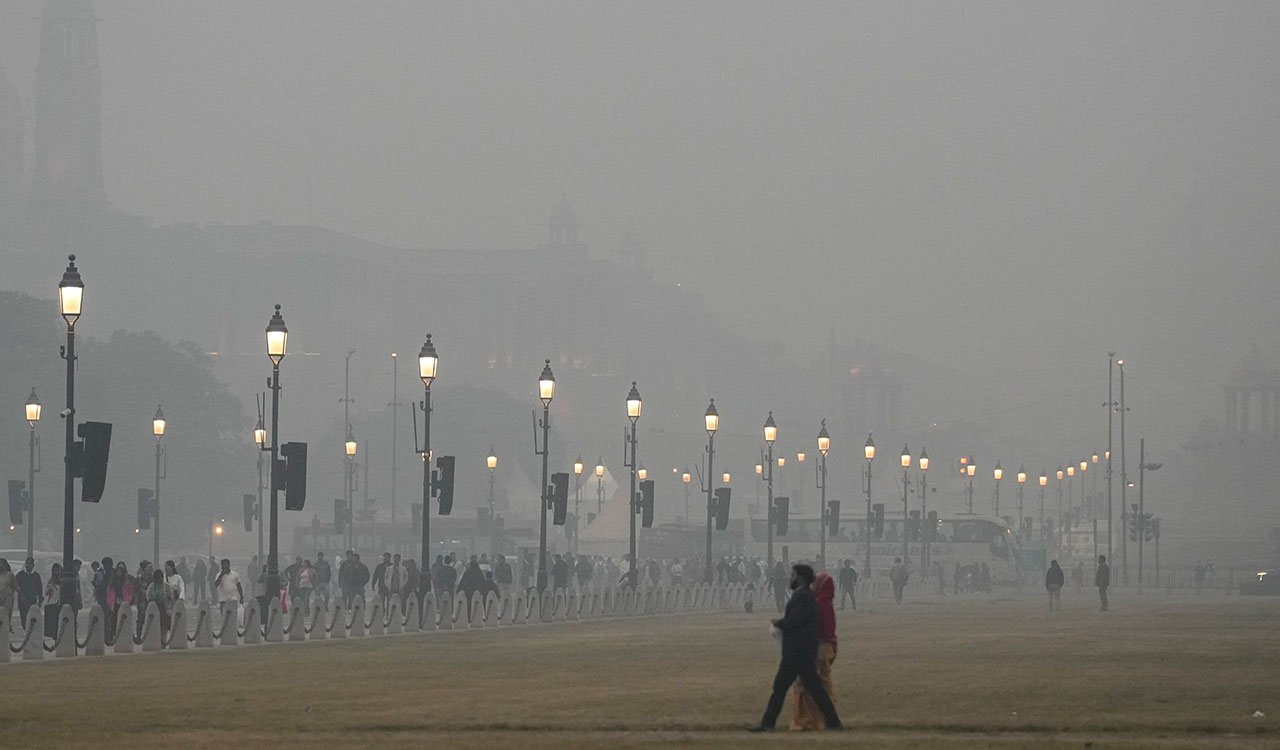
Delhi-NCR Chokes Under Toxic Smog, Visibility Drops to Zero: Delhi and the surrounding National Capital Region (NCR) are facing a severe environmental and public health crisis as toxic smog, dense fog, and an intense cold wave combine to paralyze daily life. Visibility across large parts of the capital has dropped to near zero, while air quality levels have surged into the “severe” category, raising serious health concerns for millions of residents.
According to the Central Pollution Control Board (CPCB), the Air Quality Index (AQI) in several areas of Delhi has reached alarming levels. Akshardham recorded an AQI of 493, while Sardar Patel Marg stood at 483, Badakhamba Road at 474, and Pandit Pant Marg at 417 — all falling within the severe pollution bracket. Overall, Delhi’s average AQI is hovering around 450, indicating hazardous air conditions.
The India Meteorological Department (IMD) has warned that the grim situation is likely to persist for at least the next two days across Delhi, Punjab, Haryana, Chandigarh, East Uttar Pradesh, and North East Madhya Pradesh. A combination of stagnant winds, plummeting temperatures, and dense fog has trapped pollutants close to the ground, intensifying the smog layer over the region.
Residents report burning eyes, breathing difficulties, persistent coughing, and throat irritation, with hospitals witnessing a rise in patients suffering from respiratory and cardiac ailments. Children, the elderly, and those with pre-existing health conditions are particularly vulnerable.
In response to the worsening air quality, authorities have enforced Stage 4 of the Graded Response Action Plan (GRAP) in Delhi. Under these emergency measures, construction and demolition activities have been halted, and the entry of old diesel vehicles into the city has been banned. Schools, offices, and commuters are also facing disruptions due to poor visibility and hazardous air conditions.
Environmental experts point to delayed snowfall in the Himalayan regions as a contributing factor. Typically, snowfall by late November or early December helps regulate weather patterns and improve air circulation in North India. This year, however, many hilly areas remain dry — a trend experts describe as a clear indicator of climate change. While heavy snowfall is forecast in the coming days, which may help ease pollution levels, the current crisis highlights the growing vulnerability of urban centers to extreme weather and environmental stress.
As Delhi struggles under a blanket of toxic smoke, authorities continue to urge people to stay indoors, limit outdoor activities, use masks, and follow health advisories — even as the city waits desperately for cleaner air and relief from the choking smog.
ALSO READ: