

First Surya Grahan of 2026 on February 17: Annular ‘Ring of Fire’ Eclipse Explained
First Solar Eclipse of 2026 is Today: Start Time, Sutak Period, and Zodiac Impact: A total of four eclipses are set to occur in 2026, with the first taking place on Tuesday, February 17. This celestial event will be an annular solar eclipse, popularly known as the “Ring of Fire.”
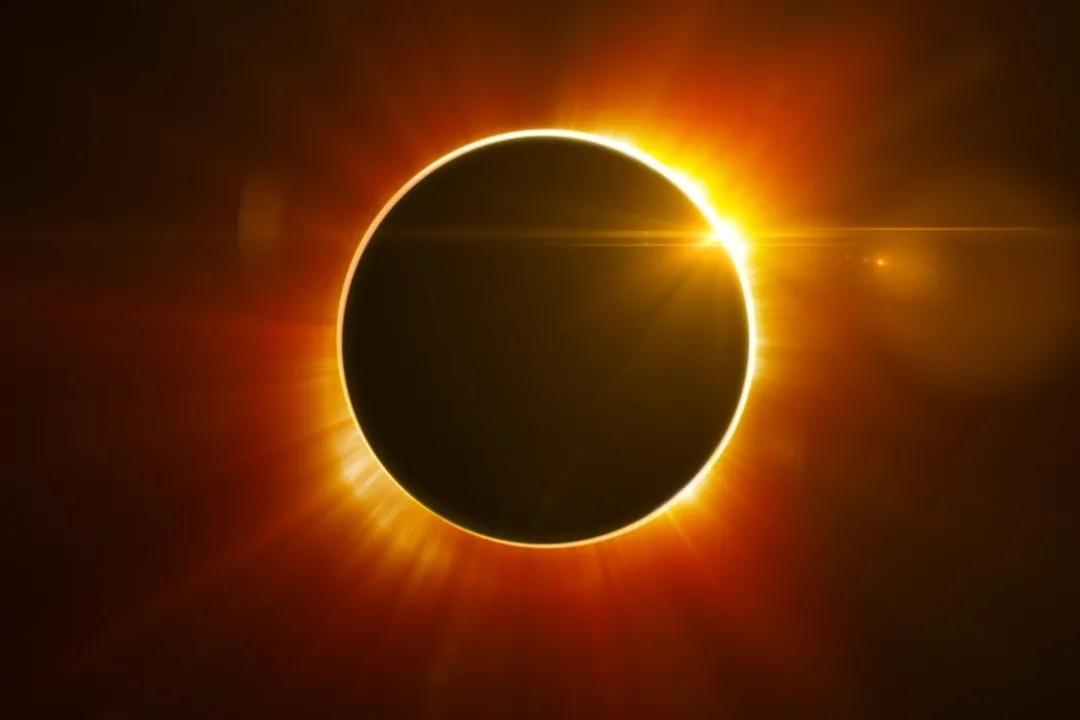
During an annular solar eclipse, the Moon passes between the Earth and the Sun but does not completely cover the Sun. As a result, a bright ring of sunlight remains visible around the Moon’s edges, creating a stunning ring-like appearance in the sky.
What Is an Annular Solar Eclipse?
An annular solar eclipse occurs when the Moon is at a point in its orbit where it appears slightly smaller than the Sun. Because of this size difference, the Moon cannot block the Sun entirely.
On February 17, 2026:
- About 96.3% of the Sun will be covered at maximum eclipse.
- The maximum annular phase will last approximately 2 minutes and 20 seconds.
- The most spectacular view will be visible in parts of Antarctica.
🇮🇳 Will the Solar Eclipse Be Visible in India?
No, the February 17, 2026 annular solar eclipse will not be visible in India.
Solar Eclipse Sutak Time 2026
According to traditional beliefs, the Sutak period for this eclipse is said to begin at 3:26 AM and end at 7:57 PM on February 17, 2026.
However, since the eclipse will not be visible in India, the Sutak period will not be considered valid there.
Eclipse During Agni Panchak
This eclipse will occur during Agni Panchak, beginning at 9:05 AM on the same day. The coincidence of an eclipse with this period has drawn additional cultural and astrological interest.
This first eclipse of 2026 promises to be a remarkable astronomical event, especially for observers in Antarctica, where the glowing “Ring of Fire” will offer a breathtaking spectacle.
ALSO READ: Fasting Benefits