

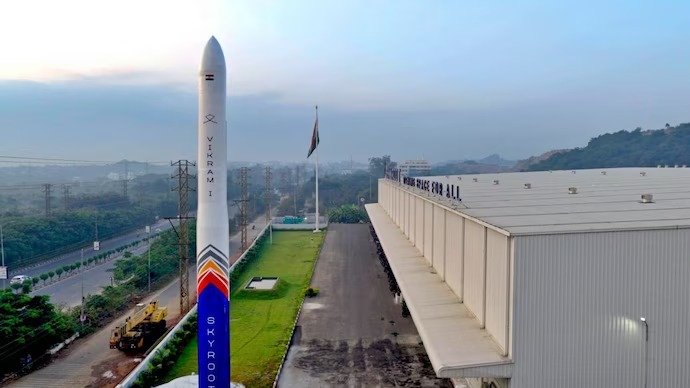
Skyroot’s Vikram-1 Launch Marks a New Era for India’s Private Space Sector
Vikram-1 Set to Make History as India’s First Private Orbital Rocket: India’s space sector is on the verge of making history. If everything goes as planned, Skyroot Aerospace’s Vikram-1 will launch from Sriharikota at 11:30 AM on July 18. If it reaches orbit successfully, it will become India’s first privately built rocket to enter Earth’s orbit.
This mission is more than just another rocket launch. It marks a major step forward for India’s growing private space industry.
What is Vikram-1? Vikram-1 is named after Dr Vikram Sarabhai, the father of India’s space program. It is a three-stage rocket that is about 23 meters tall and 1.7 meters wide. The rocket can carry up to 300 kilograms of payload into Low Earth Orbit (LEO). It is India’s first private rocket designed for an orbital mission.
Why is this launch important?
Until now, ISRO has led almost all of India’s orbital rocket launches. If Vikram-1 succeeds, Skyroot Aerospace will become the first private Indian company to launch a rocket into orbit. It will also join a small group of private space companies around the world that have achieved this milestone.
The journey started in 2022: Skyroot made history in November 2022 by launching Vikram-S, a suborbital rocket. The mission was called “Prarambh,” which means “Beginning.” Vikram-1 is a much bigger challenge because it aims to reach Earth’s orbit.
Why is reaching orbit difficult?
Sending a rocket into orbit is one of the toughest engineering challenges. The rocket must ignite its engines perfectly, separate its stages at the right time, follow the correct path, reach a speed of about 28,000 km/h, and place its payload into the correct orbit. If even one step fails, the mission can fail.
Who started Skyroot Aerospace? Skyroot Aerospace was founded in 2018 by former ISRO scientists Pawan Chandana and Naga Bharath Daka. The company has raised more than $100 million in funding and is valued at around $1.1 billion. Its advanced rocket manufacturing facilities are located in Hyderabad.
How did ISRO help?
-ISRO played an important role in Skyroot’s journey.
-It provided testing facilities, launch infrastructure, and technical support.
-Skyroot also benefited from ISRO’s large network of private suppliers.
This mission shows how government agencies and private companies can work together successfully.
What will Vikram-1 carry?
The rocket will carry small satellites, commercial payloads, and experimental payloads for customers from India and other countries. A successful mission could help Skyroot begin regular commercial launch services.
Why does this matter for India?
India has opened its space sector to private companies in recent years. A successful Vikram-1 mission will strengthen India’s private space ecosystem. It can attract global customers, increase India’s share in the small satellite launch market, and create new jobs and investments. It will also support the development of bigger, reusable rockets in the future.
Looking ahead: Skyroot plans to build larger launch vehicles, reusable rockets, and technologies that could support future human spaceflight missions. Vikram-1 is more than just a rocket. It represents the rise of India’s private space industry and the country’s growing role in the global space sector.
If the mission succeeds, it will be a proud achievement not only for Skyroot Aerospace but for the entire nation. It will show that Indian private companies are ready to compete with the world’s best in advanced space technology.
ALSO READ: UPI Transaction Value Slips in June After Record May